A Response to Productivity During The Pandemic

By Alex McDonald

Link: Why You Should Ignore All That Coronavirus-Inspired Productivity Pressure

During the times of social distancing, social media is hailed as a means to stay connected with loved ones and with the happenings of the world. However, its negative consequences are exacerbated during isolation when we begin to compare ourselves and the ways we spend our time during quarantine. I’ve noticed viral posts being shared across my feeds on multiple different platforms which read along the lines of: “If you don’t come out of quarantine with X project finished, or X fitness goal achieved, you never lacked the time you lacked motivation”.

When I first saw these posts flooding in, some weren’t as blatant as this, however I did have to sit back for a minute and wonder how anyone could be so oblivious. Firstly, when the assumption is made that we are all stuck in the same circumstances with the same resources at our disposal it is an ignorant one, and disregards those who might still be essential workers or have no choice but to leave the house. Secondly, even if the latter isn’t true for someone, there is still a global pandemic happening which sends anxiety levels skyrocketing and can be extremely detrimental to not only one’s mental health but physical health as well. Not everyone has a home gym, and many more are immunocompromised and cannot leave the house for a daily jog to get fresh air.

The most helpful words of advice for me that were like a beam of light during this uncertain time were: “Don’t be discouraged if the best you can do right now is to simply exist”. We are living day-to-day during a quarantine which still doesn’t have a definitive end date and seems to be pushed back further each time it is brought up, which makes it hard to focus on short-term goals and deadlines.

For many of us, this is the first time in our lives that we have experienced something like this, and it makes it hard to know how to act or react. Many of us are still seeking a sense of normalcy and routine during this time, and don’t get me wrong, having structure within our days should be something to strive to achieve. However, the definition of normalcy has changed drastically during this time and I don’t believe things will ever return to the way they were before this pandemic. This new concept of normal is not necessarily a bad thing and not meant to be fear-mongering in the slightest. It means (ideally) that we will be more considerate of others and cherish the moments we spend in the company of others, instead of taking the workings (and workers) of our complex societies for granted.

I know this is an optimistic outlook but I am hopeful that if we all keep to ourselves for a while that we will be able to share time and space with other human beings outside of our households (!!!) soon.

I also wanted to share an article that was beyond helpful to me for putting this entire situation into perspective. It is written by Aisha Ahmad, a writer and professor from Toronto specializing in International Security and Global Affairs who has lived through numerous wars, famines, terrorist attacks and more in places like Afghanistan and Mali. Her matter-of-fact way of presenting facts backed up with the fact that she has actually lived to come out the other side of these events was very reassuring and provided a bit of stability and even a how-to guide in a time of such uncertainty.

The news media has been presenting us with an array of mixed messages, with some giving grim projections of mass death and others downplaying the severity of this entire situation. I don’t know about you, but I’d rather take advice from a trained researcher who has lived through and provided field research on these sorts of events rather than a “task force” who told us this was nothing more than a seasonal flu three critical weeks ago. I would recommend you take Dr. Ahmad’s advice with a grain of salt of course, because as I said before I won’t pretend to know the details of everyone’s circumstances, but it helped me and I can only hope that I am able to spread some of that feeling in a time I know we desperately need it.

No matter what way you decide to approach this time of uncertainty, remember what you’re feeling is valid and although we may be distant you’re not alone. For some more than others it will take time to adjust to this new normal, and it is hard not to get down on yourself when you are bombarded with updates with those who seem to be just that much more productive or efficient with their time during quarantine. Yet when the situation is put into perspective and you begin to drown out all of the white noise, your real priorities start to become clear.
A Break I Needed

While most of the class of 2023 college students are sitting at home upset with their shortened first-year experience I am feeling a bit indifferent. I moved approximately 2,777 miles away from home to attend Pitzer College, a private liberal arts college in Claremont, California. Like most of my class, I was excited to take on my first year, to take courses I was interested in, and of course experience social life aka parties. The few months I was at Pitzer, I made a good group of friends, got a job, and participated in several organizations. Life at Pitzer was good but for some reason when I was told that I had less than 48 hours to pack up my things and go home with the idea of not returning until next semester I wasn’t entirely upset. Why? Being at Pitzer was the first time that I truly understood what it is like to be a Black woman in this world. Every day I was reminded of the color of my skin and gender, rather than be unintentionally or intentionally. While I enjoy being a part of Pitzer’s community and it is one of the most diverse communities I have been in, the micro-aggressions, racism, sexism, homophobia, etc do not go away. With only 7% of Pitzer’s campus identifying as Black I knew Pitzer would be an environment I would have to adapt to but I didn’t think it would be this hard.

August 2019 when I moved across the country to attend Pitzer College I felt like a regular first year but as time went by I realized that me being a Black woman at a predominately white institution makes me abnormal. The first week of college was the honey mood phase for everyone. Everyone was all smiles and laughs for the beginning of a new semester. I was introduced to RA’s and other seniors that were supposed to be my mentors. Two weeks into the semester I was left to fend for myself. While I still felt bubbly and determined to have a good year, I also felt a lack of belonging. Not because I wasn’t smart enough to be at Pitzer but because I felt like an outcast. It was no surprise that within the first two weeks the majority of the Black Pitzer first years became friends. I was happy to have found friends that shared similar experiences as me and most importantly to have the BSU, Black Student Union, as a space I could feel comfortable in. The BSU and its members became my safe haven but it wasn’t enough. It isn’t enough.

Seven months later, as I sat on a plane heading back to New York City it felt like a weight was lifted off of my shoulder. Although I have always been aware of the color of my skin, I felt sheltered growing up in a neighborhood, family, and school that always took pride in people of color(POC). I was so wrapped up in Black love, Black pride, and Black unity that when I faced micro-aggressions, racism, or injustice I was okay because I had people to fall back on. However, in Claremont, there was no one to rely on but myself and it was exhausting. So yes, I am happy to be home and as time goes on and I reflect more I realize I needed a break from the white spaces I was consumed by. I’ll go more into depth on why I needed this break.

In my first semester, I took a politics course at Pomona College, another school a part of the Claremont colleges, called Slavery and Its Afterlives. In the class, we read articles and books about anti-blackness and political corruption. My professor, a man of color, assigned us the book Scenes of Subjection by Saidiya Hartman. This book changed my entire life. In Scenes of Subjection, author Saidiya Hartman examines the forms of domination that usually go undetected when it comes to racial subjugation during slavery and its aftermath. Hartman examines the possibilities of resistance, address, and transformation embodied in black performance and everyday practice. Through the book and class discussions, I was able to explore the various ways Black bodies are subjugated today. Every time I left the class I left with a heavy heart. I was left defeated and questioned what it is hope for Black people. This class unsheltered me and made me uncomfortable. Any bit of power I thought I had was taken away from me. I recommend Scenes of Subjection to everyone.

Reading Scenes of Subjection, I began noticing the anti-blackness around me, starting with Pitzer. For example, how men and women often looked over me even the men in my black community. I felt that while Black men were praised and seen as the kings on campus, my voice wasn’t important. My teacher called me by another black student name while remembering and cozying up to the black football players. I may be coming off bitter but the lack of support and care for Black women on campus brought on a bit of this bitterness. I was stared at in the dining hall like I was an exotic creature. In my predominately white courses, which was the majority of the time, classmates looked at me to tell the perspective of all black people. Attending a PWI is obviously nothing like attending an HBCU but I am happy to have found a group of black friends that helps me navigate my white college experience. I am optimistic that my experience as a Black woman will get better at Pitzer and I will be taking this time at home to make sure that I am giving myself the support, care, and love that I need. In this time I hope my Black sisters are continuing to give themselves the love, support, and care they need to get through the rest of their semester. I am hopeful that when we return to campus I will be able to walk proudly in my skin and have pride in who I am.

Times are Uncertain. But Certainly We, As College Students, Can Communicate Better.

By Ella Boyd

A comedic piece about a serious problem. Hopefully this will make you laugh or reflect on your own actions. Either way, please enjoy my narration of a problem perhaps even more prevalent than Covid-19.

Ah, college. Four years of meeting new people, trying new things, going new places, and learning new subjects. This year especially brought with it some unexpected surprises. I am referring to Covid-19 and the immediate evacuation of campus. One would assume this would have serious implications, and they would be right. Our day to day lives were severely impacted by this shift in location and (for some) shift in class times.

Although the people we interacted with changed drastically, unfortunately, some things never change. Because of social media, college students around the world can easily keep up with each other: on Snapchat, Instagram, Facebook, you name it. This means that the primary channels of communication in college are still open. And that means the classic college behaviors are still occurring on these platforms.

With all the isolation, boredom, and loneliness present in our current lives, one would think people would be more compassionate than ever before. More mindful of each other’s feelings, maybe. Not the case.

Before I tell my story, let me introduce a common social media phenomenon, known as “ghosting”. The Oxford dictionary definition of ghosting can be defined as “the practice of ending a personal relationship with someone by suddenly and without explanation withdrawing from all communication.” However, as numerous articles, blog posts, and podcasts will inform you, there are different forms and levels of ghosting. There is “orbiting”, which is when the ghoster sticks around on the ghostee’s social media profiles, viewing and maybe even engaging with their online content. There is also the slow fade, which is ghosting on a small scale: the ghoster communicates less and less until they hope the ghostee doesn’t even notice their disappearance.

In my experience, the difference between ghosting and being dumped is a pretty big one. Ghosting is essentially a breakup with no strings attached. You could end up talking again a few weeks, a few months, maybe even a year! And you can’t be mad when they pop back in without explanation, because they never officially left! So, to put it simply, ghosting is when the lack of effort in a casual relationship becomes so severe that the communication completely ends for a period of time, which ultimately sends the message that there is no real connection there at all. The whole experience leaves people feeling really good inside. (Please note my sarcasm.)

I have been ghosted a few times. I’m not ashamed. I’ve also ghosted people a few times, and for that I am a bit more ashamed, however, I firmly believe ghosting can sometimes be an acceptable action that shows lack of interest and can end things between two people calmly. During a pandemic, though, I am not a fan.

Normally, ghosting goes something like this: two people meet, they talk, and one of them loses interest and decides to leave without explaining why. The person who was ghosted may be confused and upset. They may wonder why the ghoster still looks at their Instagram and Snapchat stories. But the person who was ghosted can just go offline for a bit. Reconnect with their hobbies. Hook up with new people. Keep chugging along in their real, physical life. Right now, though, our virtual lives are our real lives. Which makes being ghosted pretty difficult.

Last night, as I sat in my dimly lit ski condo, staring up at the vacant, still chairlifts, the dark mountain looming ominous with not a single cat to be found grooming a trail, I checked Snapchat for the fortieth time that day, crying into my barely-thawed vegan lasagna. My best, most snapped friend on Snapchat had left me on read for 24 hours, killing our 65 day streak and telling me, with radio silence and no explanation why, that we were done. Normally, I would suck it up, eat the damn lasagna, go to bed, and wake up the next morning to put on my ski boots, put some handwarmers in my gloves, and ski with my friends the whole day, not checking Snapchat even once. Some of the people I would have skied with would have been cute, and I would have forgotten my minor problem. But right now, I had nothing to look forward to the next day except more hours mining social media for who knows what, and mourning the loss of spring skiing because of Covid shut-downs.

So, who knows how my already negative mental state will deal with this loss. Will I binge eat ten bowls of cereal and pretend I don’t care cause the gyms are closed anyway? Will I neglect my basically non-existent homework to binge-watch Tiger King and wish I’d fed my ghoster to my own tigers? Will I Facetime a friend? The only thing that is certain is that, for the foreseeable future, I will be spending a lot of time online.

Now I am forced to make the choice: block the ghoster so they can’t have any access to me and my life, thus affirming we are done, or do nothing and allow myself to be tormented by their viewing my life from arm’s length, with the small hope we may one day reconnect if school ever becomes physical again.

All of this leaves me with a few major takeaways. One, social media and virtual connections are absolutely not an adequate substitute for real connections and in-person, human interactions. For this reason, perhaps ghosting shouldn’t hurt so much. If someone’s biggest affect on your life is virtual, were they really ever there at all?

Secondly, ghosting is, at least for the foreseeable future, not ethical. We are all trapped (mostly) inside, or even for those lucky enough to be able to venture outside, we are devoid of most of our usual, in-person interactions. It is easy to concentrate on our online lives, because social media really is our social environment at the moment. So, don’t be rude. Take three seconds to say goodbye to the Instagram baddies you’ve been texting with for the last few weeks. Or take one phone call to end things with your college boo you may not see for months. Trust me, a little time spent now will result in a lot less time spent overanalyzing or overthinking down the road.

My March in a nutshell

‪The events of this past month have been a real whirlwind for me, as they have been for most of us.I don’t think I’ve had one that is so eventful. I’m taking a writing break since finishing my dissertation, and haven’t done personal narrative written in ages. But for now, I mostly feel grateful for my family, friends, mentors, and students.

March 4: became a PhD‬

‪March 9: Turned 32‬

‪March 13: Began social distancing ‬

‪March 22: Tested for Coronavirus ‬

‪March 24: Received negative test results, continued isolation ‬

‪March 31: Began remote teaching via Zoom ‬

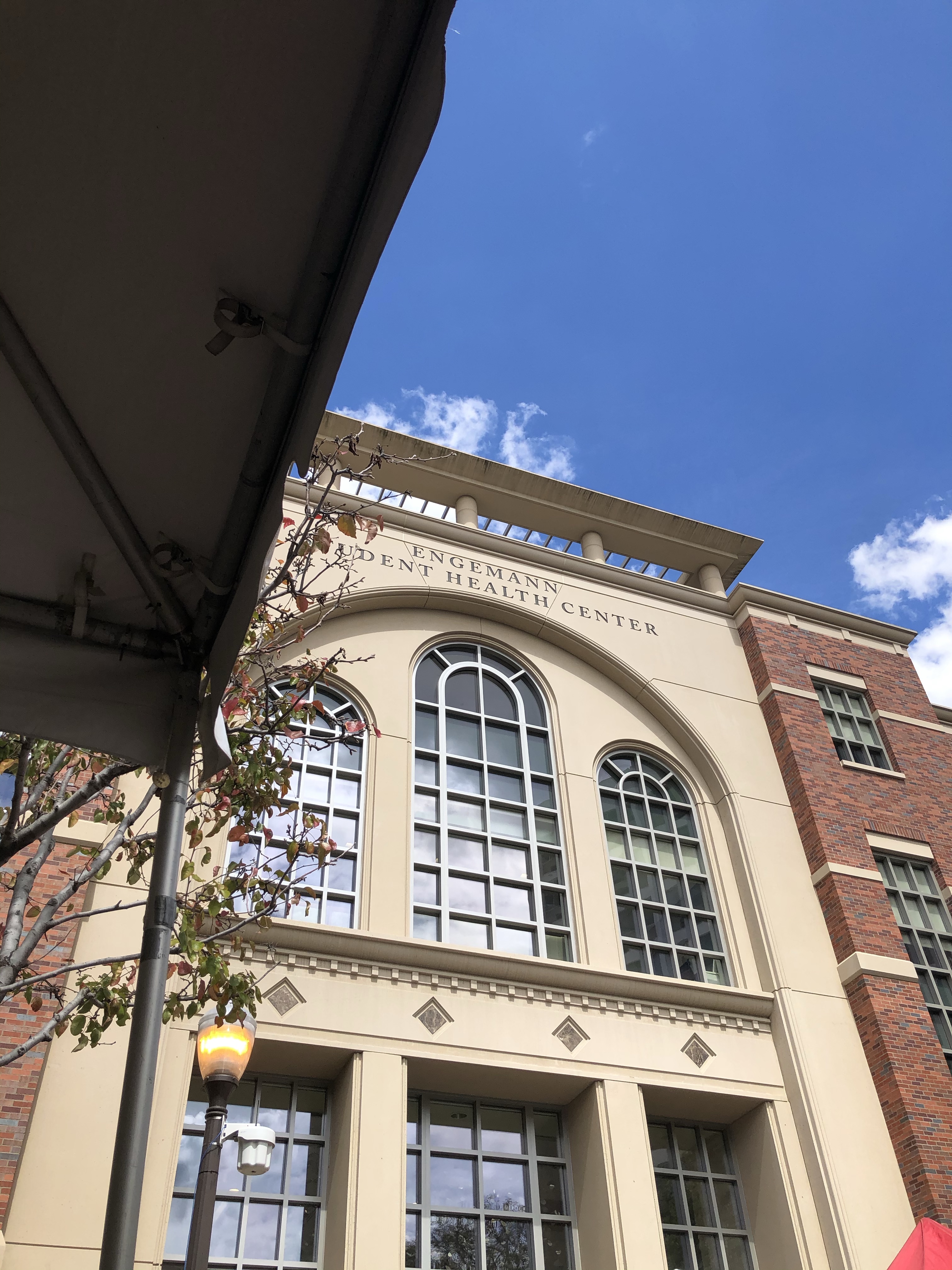
Some photos from the test site at USC below.

Your faithful prof,

(Dr.) Stefania Marghitu

“Dr. Fauci debunks coronavirus misinformation on a video chat with Trevor Noah” via Mashable

Link here.

As the coronavirus continues to spread, misinformation is spreading just as quickly.

During Thursday’s edition of The Daily Social Distancing Show, Trevor Noah spoke to National Institute of Allergy and Infectious Diseases director — and now famous face-palmer — Dr. Anthony Fauci, in order to sort the fact from the fiction.

Over the course of the 13-minute interview, Noah asks Fauci about re-infection, the way the virus spreads, and the effect it has on young people. Fauci’s clear responses are well worth a watch.

“Network TV Sees a Ratings Revival Amid Coronavirus Outbreak, but Will It Last?” Vía Variety

Link here.

As the coronavirus forces more and more people in the United States to stay home in self-isolation, it’s hardly a surprise that broadcast viewership has been up almost across the board.

The sheer boost in viewership is a blessing for the networks. After all, the recent broadcast ratings decline in the face of streaming is much publicized, and typically at this time of year, post-daylight savings, numbers take a tumble. But whether the current spike will last beyond the weeks, perhaps months, that the pandemic continues to sweep the nation is a big question, as is whether the networks will have any new content to keep viewers glued to their screens when this is all over.

“What we’re seeing in the elevated usage of television is a variety of motivations driving people to watch,” says Will Somers, executive vice president and head of research at Fox.